
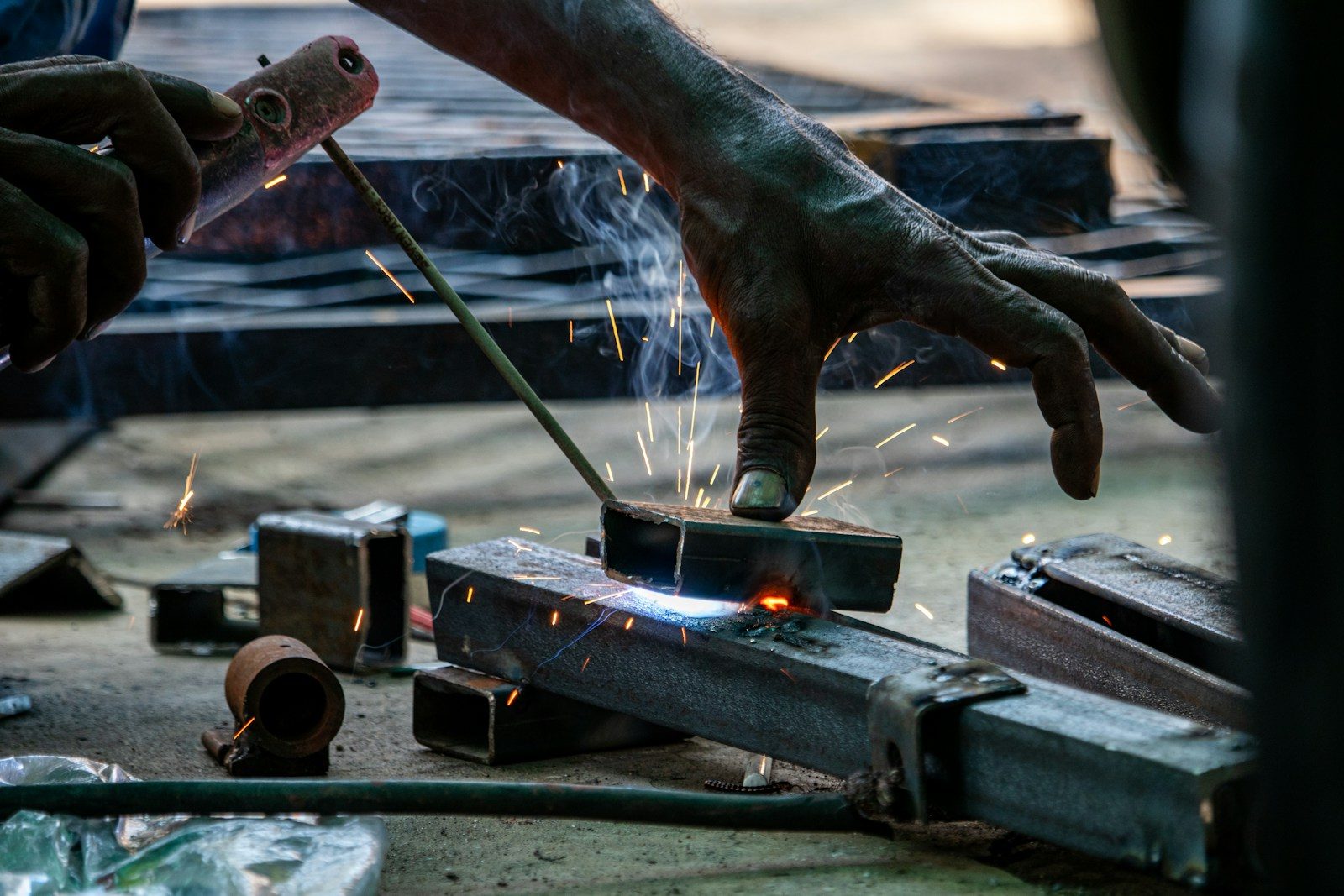
Selecting the right materials for high-temperature environments can mean the difference between operational success and catastrophic failure. Understanding material selection for high-temperature applications requires a comprehensive grasp of both the thermal demands of your specific process and the physical properties of available materials. Engineers and maintenance professionals face this challenge daily across industries ranging from petrochemical refineries to aerospace manufacturing. The stakes are high, as incorrect material choices can lead to equipment failure, safety hazards, and significant financial losses.
The fundamentals of thermal resistance
Temperature tolerance represents just one dimension of material performance in extreme heat conditions. Materials must also maintain their mechanical strength, resist oxidation, and preserve dimensional stability as temperatures climb. Most conventional materials begin to degrade significantly above 200°C, experiencing changes in tensile strength, elasticity, and chemical composition. Steel alloys, for example, can lose up to 50 percent of their room-temperature strength at 500°C. This degradation accelerates exponentially as temperatures increase, making precise material selection absolutely critical for applications operating above 300°C.
The chemical environment surrounding high-temperature components adds another layer of complexity to material selection. Oxidative atmospheres accelerate material degradation at elevated temperatures, while reducing environments present different challenges entirely. Corrosive gases, thermal cycling, and pressure fluctuations all interact with temperature to create unique stress conditions. Engineers must evaluate these combined factors rather than considering temperature in isolation. A material that performs excellently in dry heat might fail rapidly when exposed to steam or acidic combustion products at the same temperature.
Ceramic and mineral-based sealing solutions
When selecting gasket materials for high-temperature applications, traditional organic compounds quickly prove inadequate above 250°C. Ceramic and mineral-based solutions offer superior thermal stability for demanding applications. Mica gasket material stands out for its exceptional temperature resistance, capable of withstanding continuous exposure to temperatures exceeding 600°C without significant degradation. This naturally occurring silicate mineral splits into thin, flexible sheets that maintain their structural integrity even as temperatures approach 800°C in certain formulations. The material’s layered structure allows it to compress and conform to sealing surfaces while resisting the thermal expansion that destroys conventional gaskets.
Mica gasket material performs particularly well in applications involving rapid temperature fluctuations, such as exhaust systems and steam turbines. The sheets can be reinforced with metal tangs or wire mesh to improve handling characteristics and increase resistance to blowout at high pressures. Pure mica gaskets typically handle pressures up to 40 bar, while reinforced versions can manage pressures exceeding 100 bar at temperatures above 500°C. Installation requires attention to bolt torque specifications, as over-tightening can fracture the delicate mineral layers and compromise sealing effectiveness.
Understanding polymer limitations and alternatives
Polymers dominate low-temperature sealing applications due to their flexibility and chemical resistance, but most decompose rapidly above 200°C. PTFE gaskets represent an important exception to this limitation, offering usable service temperatures up to 260°C in continuous operation and short-term excursions to 315°C. The fluoropolymer maintains its non-stick properties and chemical inertness across this temperature range, making it valuable for chemical processing equipment handling corrosive materials at moderate temperatures. However, engineers must recognize that PTFE undergoes a phase transition at approximately 327°C, where its crystalline structure changes and mechanical properties deteriorate significantly.
The material’s tendency to cold flow under compression represents another consideration when specifying PTFE gaskets for temperature-sensitive applications. This creep behavior accelerates with increasing temperature, requiring periodic retightening of bolted joints to maintain seal integrity. Filled PTFE formulations address this limitation by incorporating glass fibers, graphite, or mineral fillers that reduce cold flow by up to 80 percent. These enhanced compounds extend the practical service life of fluoropolymer gaskets in high-temperature applications while preserving much of the parent material’s chemical resistance.
Metallic solutions for extreme conditions
When temperatures exceed 600°C, metallic gaskets become the primary sealing solution for critical applications. Stainless steel, Inconel, and other high-nickel alloys maintain structural integrity at temperatures where ceramic and mineral materials become too brittle for reliable sealing. Spiral-wound gaskets combining metal winding with graphite or mica fillers achieve effective sealing up to 1000°C in properly designed joints. The metal provides mechanical strength and springback, while the softer filler material conforms to surface irregularities and prevents leakage.
Specialized coatings further extend the capabilities of metallic sealing components in extreme environments. Aluminide coatings protect base metals from oxidation at temperatures exceeding 1100°C, while ceramic barrier coatings enable operation above 1300°C in aerospace applications. These surface treatments add significant cost but prove essential for gas turbines, rocket engines, and industrial furnaces. The coating thickness typically ranges from 25 to 150 microns, requiring careful surface preparation and application control to ensure adhesion and uniform coverage.
Advanced ceramic compounds for specialized applications
Oxide ceramics represent the pinnacle of temperature resistance for structural and sealing applications. Alumina, zirconia, and barium aluminate compounds maintain their properties at temperatures exceeding 1500°C. Ba 203, or barium oxide, serves as a crucial component in specialized high-temperature ceramic formulations, contributing to improved thermal shock resistance and reduced reactivity with corrosive gases. When combined with alumina in controlled proportions, ba 203 creates ceramic compounds capable of withstanding the extreme conditions inside metallurgical furnaces and nuclear reactors. These advanced materials require precise manufacturing controls and careful handling due to their brittleness at room temperature.
The cost of advanced ceramic components reflects their specialized production requirements and superior performance characteristics. Simple alumina parts may cost three to five times more than equivalent metal components, while complex shapes incorporating ba 203 and other modifiers can reach ten times the cost of conventional materials. Despite this premium, the extended service life and reduced maintenance requirements often justify the investment in critical high-temperature applications. Engineers must balance initial material costs against total lifecycle expenses when making selection decisions.
Practical selection criteria and testing protocols
Successful material selection requires systematic evaluation of multiple performance parameters beyond maximum temperature rating. Thermal conductivity affects heat distribution and thermal stress development within components. Coefficient of thermal expansion determines compatibility with adjacent materials and influences joint design requirements. Chemical compatibility with process fluids prevents premature degradation and contamination issues. Each parameter demands careful consideration within the specific operating context of your application.
Laboratory testing validates material selections before committing to full-scale implementation. Thermogravimetric analysis measures weight loss and decomposition temperatures under controlled heating rates. Differential scanning calorimetry identifies phase transitions and thermal events that might compromise performance. Mechanical testing at elevated temperatures quantifies strength retention and creep behavior under realistic conditions. These characterization methods cost between $500 and $2000 per material sample but provide invaluable data for critical applications where field failures carry severe consequences.
Understanding material selection for high-temperature applications ultimately requires balancing theoretical knowledge with practical experience. Consulting with material suppliers and reviewing case studies from similar applications provides valuable insights that complement laboratory data. Field testing under actual operating conditions remains the final validation step, confirming that selected materials meet performance expectations across the full range of process variables.
